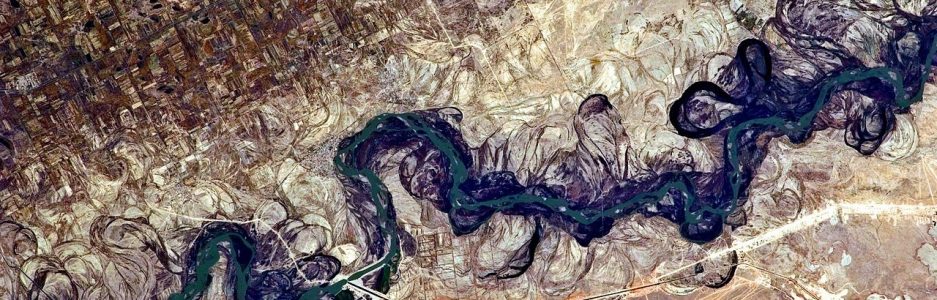
Thirst: the Global Quest to Solve the Water Crisis (Verso Books, 2025)

Two billion people worldwide are without access to safe water. But solutions are hard to come by when causes are not clearly defined. In a whirlwind tour of global water insecurity, one of the world’s leading experts on water politics chronicles the massive impact of climate change; the insatiable water demands of industry and agriculture; and the widespread lack of state investment in infrastructure. Filippo Menga focuses in particular on the high priests of global developmentalism – celebrities, CEOs, and sustainability directors – who have emerged as some of the loudest voices about water issues while offering few tangible solutions. Thirst shows that if humanity is to escape the deadlock that bedevils access to clean water, it has to reconsider both its faith in the market and its relationship with nature.
Political Geography in Practice: Theories, Approaches, Methodologies (Palgrave Macmillan, 2024)
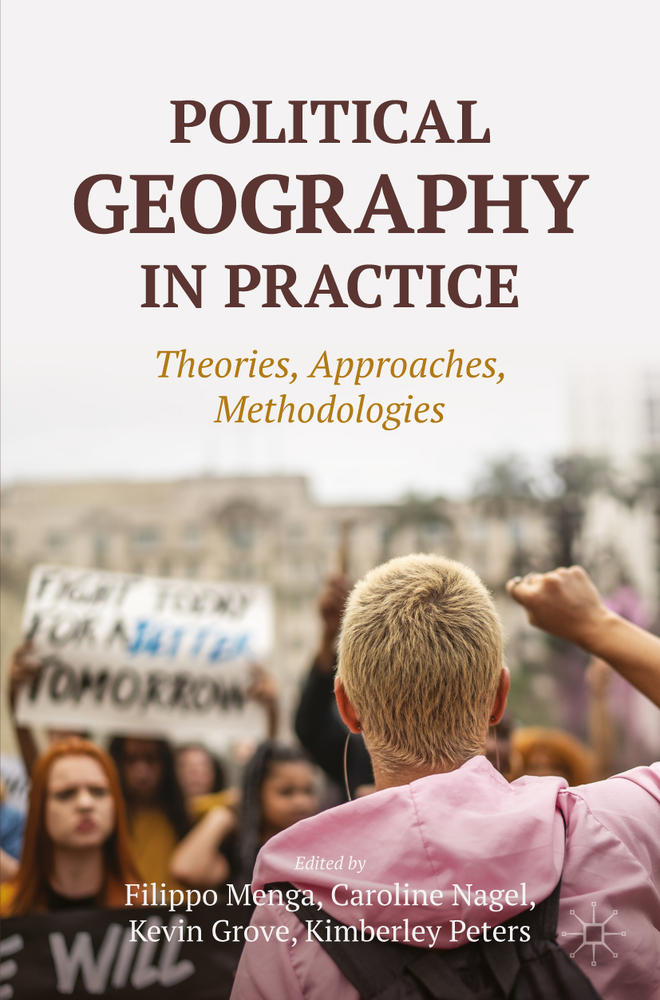
This innovative textbook on the theories, approaches and methodologies that inform political geography is brought together by past and present editors of the journal of the same name. The book fills the current gap in the literature through a reflection on the ‘doing’ of political geography: its very practice. The book includes chapters authored by leading and emerging voices in the field and covers themes to guide students across various degree levels, as well as university staff and faculty, in a logical and practical manner. The textbook allows students to develop critical thinking and reflect on important aspects of the practice of the sub-discipline. It presents how theories, approaches and methodologies are adopted by researchers in practice, equipping political geographers at all stages to develop their own individual research projects.
Sete: Crisi idrica e capitalismo (Ponte alle Grazie, 2024)
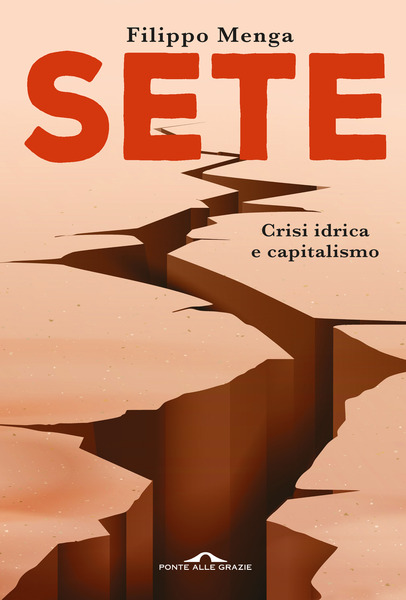
Sete è un’impietosa critica alle strategie messe in atto per arginare la crisi idrica, un campanello d’allarme sugli effetti devastanti della fede cieca nel mercato. Ma allo stesso tempo è una profonda riflessione sul nostro rapporto con la natura e un potente richiamo all’azione: « Non è mai troppo tardi per prendere posizione e invertire la rotta del discorso».
Power and Water in Central Asia (Routledge, 2018)

This book analyses the role of state power in transboundary water relations. It provides an in–depth study of the evolution of interstate relations in Central Asia in the field of water from 1991-2015. Offering fresh theoretical interpretations to the subjects of power and counter-hegemony in the Aral Sea basin, this book puts forward the original circle of hydro-hegemony, an analytical framework in which the various forms of power are connective in the function of hegemony. It will be of interest to scholars in the field of water and environmental politics and Central Asian Studies.
Water, Technology and the Nation-State (Routledge Earthscan, 2018)
Just as space, territory and society can be socially and politically co-constructed, so can water, and thus the construction of hydraulic infrastructures can be mobilised by politicians to consolidate their grip on power while nurturing their own vision of what the nation is or should become. This book delves into the complex and often hidden connection between water, technological advancement and the nation-state, addressing two major questions. First, the arguments deployed consider how water as a resource can be ideologically constructed, imagined and framed to create and reinforce a national identity, and secondly, how the idea of a nation-state can and is materially co-constituted out of the material infrastructure through which water is harnessed and channelled.